We Are All Designers of Food Systems
Design is often described as a professional discipline practised in studios, universities, and consultancies, shaping objects, services, environments, and policies through specialised knowledge and technical skill. Yet long before design became professionalised, humans were already designing the systems that sustain life.
Tools were designed. Markets were designed. The structures of towns and villages were designed. Even the vast logistical systems that move food across continents today are designed arrangements that quietly shape how money flows, how land is used, how farmers survive, and how communities either strengthen or slowly lose their vitality. In this sense, whether we realise it or not, we are all already participants in the design of food systems.
The deeper question is not whether we design, but whether we understand the living systems within which our designs unfold. Food systems are not merely agricultural or logistical mechanisms; they are ecological, cultural, economic, and civic systems intertwined with the health of land and community. The choices we make about what we grow, where we purchase food, how farmers are supported, and how municipalities shape infrastructure and procurement all ripple outward through landscapes and economies.
When value flows through distant, centralised supply chains, both land and community tend to weaken. When value circulates through small farms, regional markets, and local food infrastructure, resilience begins to take root again. Food, in this sense, is formative.
Healthy land produces nourishing food. Nourishing food sustains healthy bodies. Healthy bodies support clearer perception. Clearer perception enables wiser design. Soil, society, and economy are therefore not separate domains but expressions of one living loop.
Over the past decade I have been involved in a number of practical food system initiatives in Tasmania, including community gardens, seed libraries, and regional projects such as the Huon Valley Food Hub, which attempts to strengthen connections between small farmers, local distribution, and regional markets. Through these experiences I began to notice something curious.
In Australia alone, more than seven thousand food strategies and policy documents have been produced over the past decade, yet despite this remarkable proliferation of reports, frameworks, and plans, the practical knowledge required to activate a living food system within a real place remains surprisingly rare.
Agricultural education tends to focus on farming practice.
Policy education tends to focus on institutions and governance.
Community initiatives often focus on individual projects.
What is seldom taught is the capacity to see and work with the whole system, recognising how soil health, farms, markets, infrastructure, governance, and culture interweave within the regional organism.
Within ecological movements another misunderstanding sometimes appears. Many people imagine that regenerative agriculture or permaculture somehow exists independently of civic structures and governance. Yet food systems are deeply shaped by municipal realities: by land use planning, by procurement decisions in schools and hospitals, by infrastructure investment, and by the public funds and rates that circulate through regions.
Food systems therefore live simultaneously in soil and policy. Bridging this gap between land stewardship and governance has become a central thread of my work. Initiatives such as Grow Small Feed All explore how existing public spending could be redirected toward strengthening small farms, regional food infrastructure, and the living economies that emerge when food once again circulates locally.
Out of this journey another step has begun to take shape.
Living Earth College has been created as an educational platform dedicated to helping practitioners, community leaders, designers, farmers, and municipal workers learn how to activate local food systems in their own regions, connecting ecological understanding with practical implementation.
The flagship program, Activating Food Systems, brings together a small cohort of participants who wish to explore how soil stewardship, community initiatives, regional infrastructure, and public policy can work together as parts of a living system rather than as isolated efforts.
The intention is not merely to study food systems, but to cultivate praxis, the capacity to translate ecological insight into real projects that nourish both land and community.
For those who feel called to explore this work more deeply, I will be hosting a free introductory seminar on 19 March, where we will open a conversation about how communities can begin activating local food systems in practice and explore the thinking behind the Living Earth College program.
The next cohort of the Activating Food Systems course is now open for enrolment, and more information about the program can be found here:
https://livingearthcollege.org/living-earth-college-journal/activating-food-systems-course
The cohort itself will remain intentionally small — around twenty participants — because the work of reweaving soil, community, infrastructure, and governance requires not only knowledge but genuine dialogue and shared inquiry.
After all, resilient food systems will not emerge from documents alone.
They will grow where people learn once again how to see the relationships between soil, society, and economy, and how to design with life rather than merely around it.
With life, Con Viv.
Dr Emily Samuels-Ballantyne
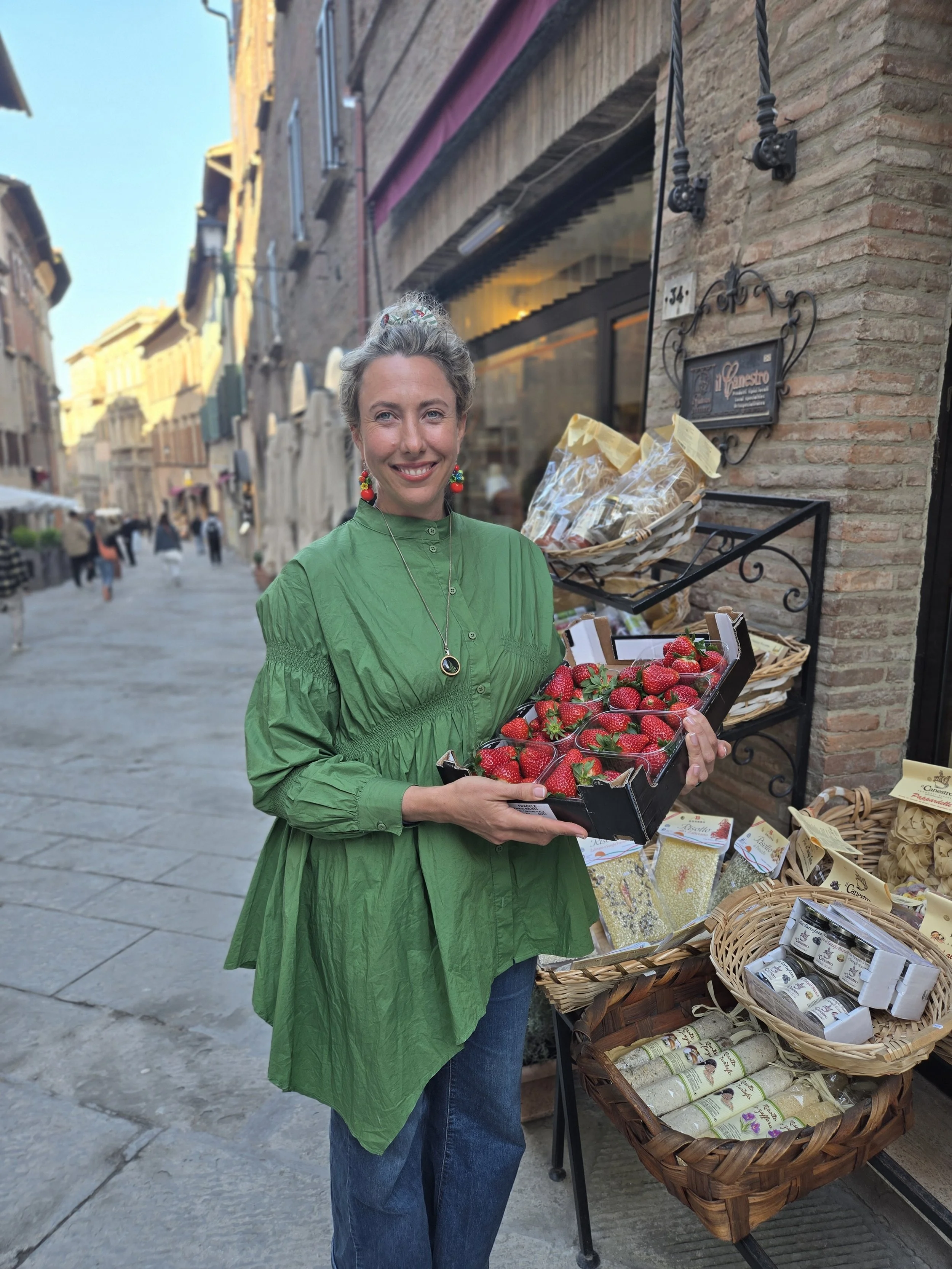
A personal invitation
Over many years I have worked with farmers, communities, and local governments exploring how stronger local food systems might emerge. Through initiatives such as the Docklands Food Garden, the Huon Valley Food Hub, the Peach & Pear Food Box, and the Shepparton Food Hub, I saw both the potential of community food initiatives and the structural barriers that often prevent them from flourishing.
My doctoral research reflected on these experiences and asked a simple question:
What conditions allow local food systems to truly thrive?
Living Earth College was created to share these insights and support people working to strengthen food systems in their own regions. If you feel called to participate in this work, I warmly invite you to join the first cohort.
Dr Emily Samuels-Ballantyne
Founder, Living Earth College