
“We weave ideas, scribe forward, align with life and create connection.”
— Dr Demeter | Emily Samuels-Ballantyne
Island Almanac is a Tasmanian regenerative journal gathering reflections on land, food systems, culture and community economies from the edges of farms, gardens and communities. Covering topics on Foundational Economics, Convivial Governance, Anthroposophic Philosophy & Everyday Regeneration in Tasmania.
Overview
The Island Almanac is a living compendium of stories, tools and place-based examples that weave together foundational economics, anthroposophic wisdom and the rhythms of everyday life. Rooted in the soils of Tasmania and flowering from Magical Farm Tasmania. Across its pages you’ll find:
Practical essays on redirecting public and private wealth into community resilience
Anthroposophical reflections on seasonal rhythms, ritual and soul-led innovation
Tasmanian case studies from coastal hamlets to mountain valleys
Project spotlights on island-wide initiatives, from seed libraries to solar co-ops.
Living Architecture: A dynamic framework of interconnected practices, food, housing, energy, governance, culture, activism and economics that grows, adapts and breathes like an ecosystem, rather than standing as static policy or infrastructure. These seven pillars form the Living Architecture of Regen Era Design Studio & The Island Almanac: integrating heart, head & hands to power a truly regenerative future.
Food, Plants and Planets
Housing and Natural Building
Energy
Community Life, Learning & Culture
Sacred Activism
Convivial Governance
Regenerative Economic Design.

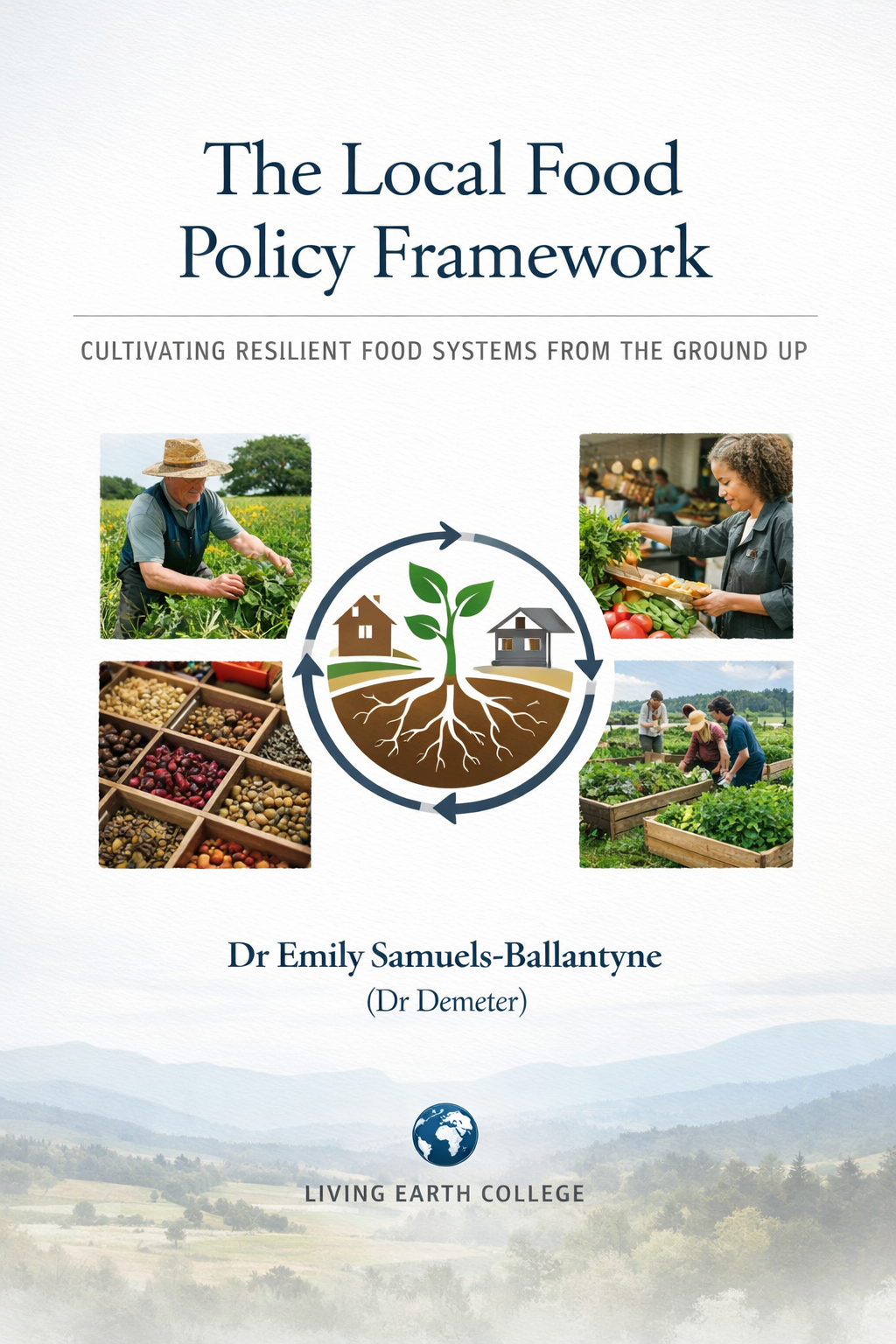
Convivial Food Systems: Rethinking Local Food Policy from the Ground Up
What would food policy look like if it began in communities, farms and local economies rather than distant institutions? In this Island Almanac article, Dr Emily Samuels-Ballantyne (Dr Demeter) introduces her white paper The Local Food Policy Framework, drawing on more than two decades of practical work in regenerative agriculture, community food systems and regional food economies. The article explores a design-led approach to food policy, where initiatives such as food hubs, seed libraries, compost systems and community gardens generate the “living knowledge” needed to inform better policy. These ideas are now being explored through Living Earth College and the Activating Local Food Systemsfoundation course, inviting practitioners and communities to prototype real initiatives in their own places.