
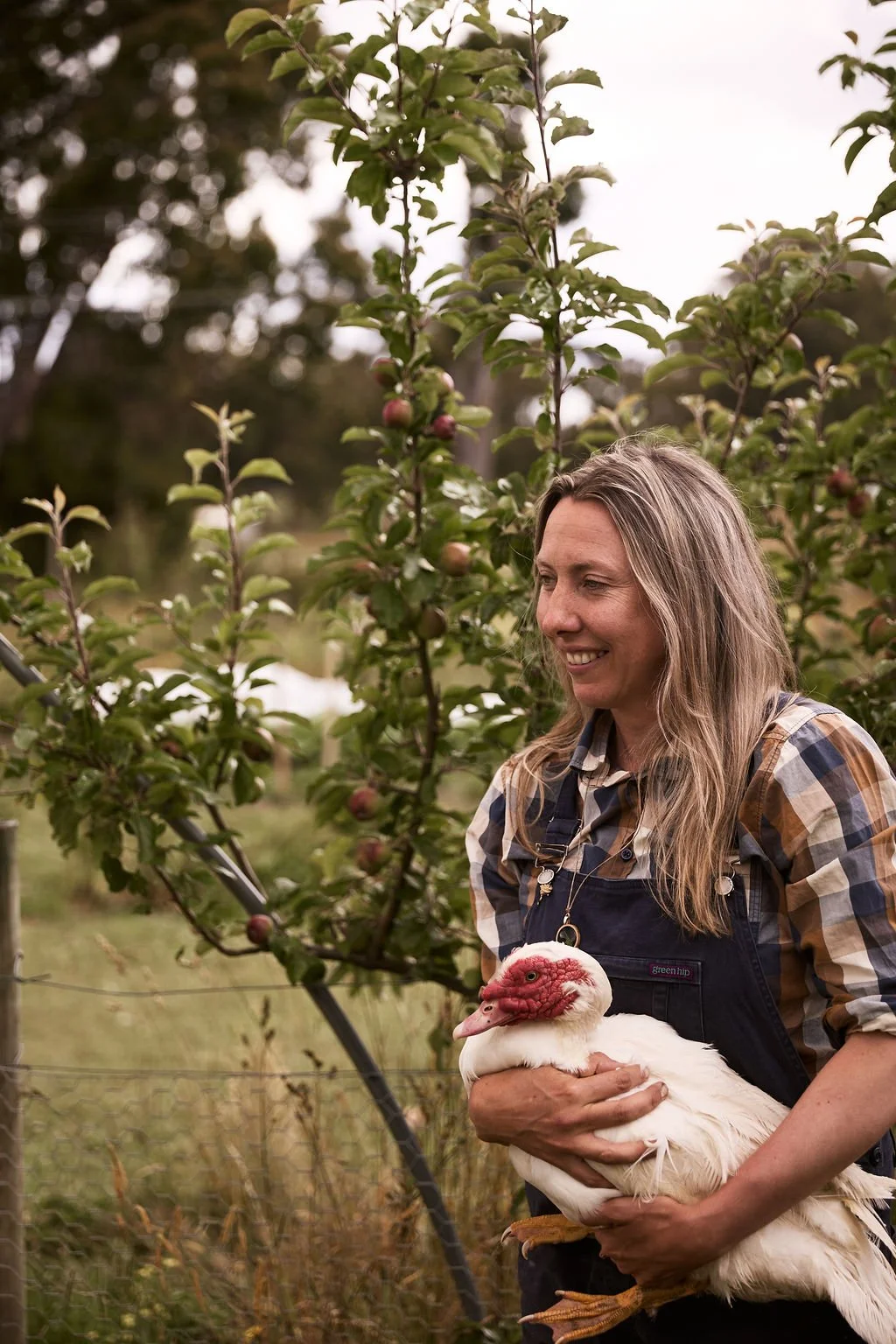
“We weave ideas, scribe forward, align with life and create connection.”
— Dr Demeter | Emily Samuels-Ballantyne
Island Almanac is a Tasmanian regenerative journal gathering reflections on land, food systems, culture and community economies from the edges of farms, gardens and communities. Covering topics on Foundational Economics, Convivial Governance, Anthroposophic Philosophy & Everyday Regeneration in Tasmania.
Overview
The Island Almanac is a living compendium of stories, tools and place-based examples that weave together foundational economics, anthroposophic wisdom and the rhythms of everyday life. Rooted in the soils of Tasmania and flowering from Magical Farm Tasmania. Across its pages you’ll find:
Practical essays on redirecting public and private wealth into community resilience
Anthroposophical reflections on seasonal rhythms, ritual and soul-led innovation
Tasmanian case studies from coastal hamlets to mountain valleys
Project spotlights on island-wide initiatives, from seed libraries to solar co-ops.
Living Architecture: A dynamic framework of interconnected practices, food, housing, energy, governance, culture, activism and economics that grows, adapts and breathes like an ecosystem, rather than standing as static policy or infrastructure. These seven pillars form the Living Architecture of Regen Era Design Studio & The Island Almanac: integrating heart, head & hands to power a truly regenerative future.
Food, Plants and Planets
Housing and Natural Building
Energy
Community Life, Learning & Culture
Sacred Activism
Convivial Governance
Regenerative Economic Design.

Scenario 2 for Salmon: Cut Through the Spectacle, Fund the Living Economy
Tasmania’s salmon debate has become an expensive, polarised spectacle that generates plenty of documents and conflict but too little practical change. The article proposes “Scenario 2”: a clear transition that reduces ecological pressure through published water thresholds and pre-agreed actions, while building a diversified, localised food and protein economy. Using Tasmania’s Agri Food ScoreCard, it highlights a core paradox: despite producing around 11 times more food than residents consume, Tasmania still sources about $1.97b (36.5%) of its food spend from outside the state. Capturing $1b/year of that leakage through hubs, cold chain, processing, cooperative logistics and public procurement could support roughly 5,000–7,100 jobs, matching salmon’s employment footprint with a more resilient model.
We Are All Designers: The Case for Life Systems Literacy
We Are All Designers: The Case for Life Systems Literacy explores the proposition that design is not confined to professional studios or academic institutions but is an inherent human activity shaping economic flows, ecological systems and cultural life. From the first tools and languages to supermarkets and digital platforms, the structures that organise society are designed and continuously redesigned through our daily participation. Drawing from an anthroposophic lens and grounded in lived practice as both farmer and design theorist, this essay argues that modern education has refined technical skill while neglecting life systems literacy. Economic flow mirrors ecological flow: where value circulates determines whether landscapes regenerate or thin, whether communities strengthen or fragment. Food, in particular, is presented not merely as nutrition but as formative infrastructure, shaping perception, culture and ultimately the futures we design.
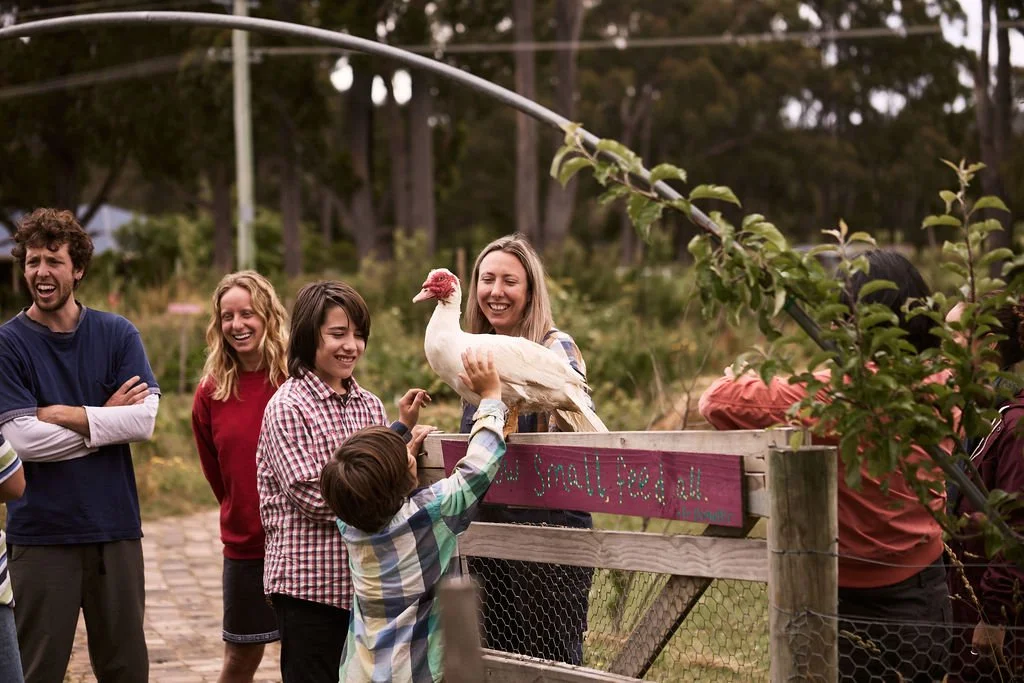
Through the framework of Con Viv, convivial living systems design and the regional initiative Grow Small, Feed All, the article positions localised biodynamic food systems as civic and perceptual infrastructure rather than nostalgic alternatives. It introduces Living Earth College as an emerging translocal platform dedicated to embedding soil processes, cooperative economics, phenomenological observation and place-based food projects into foundational education.
Ultimately, the essay invites designers, students, policymakers and households alike to recognise their agency as co-designers of living systems and to consciously participate in shaping regenerative economic and cultural futures

The Fault Line Series: What Is Your Business Model?
In this sharp and grounded essay, Dr. Demeter (Emily Samuels-Ballantyne) turns the common bureaucratic question, “What is your business model?” back on local government itself. Drawing on two decades of lived experience as a community builder, policy designer, and regenerative farmer, she critiques the top-heavy policy pipelines that reduce care to documents and engagement to output metrics. With references to institutional theorists like Guy Debord, Ivan Illich, Henri Lefebvre, and Helena Norberg-Hodge, the essay explores how public funding is often diverted away from tangible outcomes into layers of abstraction and consultancy. Through the lens of her own project, the Huon Valley Food Hub, Demeter offers an alternative approach: the redirection of the brief toward grounded, co-created, and regenerative public work. The piece concludes with a call for a new kind of public service, one rooted in care, participation, and a living systems worldview.